Case 02 · Beijing
Beijing in seven days, the wall nobody restored
Two travellers, seven days and one non-negotiable: the wall with nobody else standing on it.
- Days
- 7 days, 6 nights
- Route
- Beijing, with two nights at Gubei
- Best months
- April–May, September–October
- Planning fee
- 99 USD
The traveller
Lena
“An old wall, not a rebuilt one — the sort with the stone worn hollow in the middle. And nobody else in the photograph.”
What they asked for
- An old, unrestored wall: worn stone underfoot, no fresh brickwork along the top, no handrail where there should not be one.
- Few enough people to take a photograph with nobody in it, at a normal hour rather than by getting up at five.
- Seven days without a monument every single morning.
- One base in the city and two nights out at the wall — not a new hotel every day.
How we planned it
They had two requirements and were relaxed about everything else: an old wall rather than a rebuilt one, and few enough people to take a photograph with nobody in it. Two lines, and between them they chose the section.
Badaling and Mutianyu are the names most itineraries reach for, and each of them fails one of the two. Badaling is the closest and the most heavily rebuilt. Mutianyu is faithfully restored, gentler, and queuing for its cable car by nine. Simatai is steeper, largely unrestored, and two and a half hours out — the distance is what keeps the numbers down, and the unrestored stone is the reason to drive it.
What we left out, and what replaced it
| Left out | Instead |
|---|---|
| Badaling, because that is where the coaches go | Simatai — unrestored stone, two and a half hours out |
| A half-day at the wall and back in the city by dinner | Two nights at Gubei, so the afternoon is the water town |
| A different hotel every second night | One city base, and one move out to the wall |
| The wall on day two, still jet-lagged | Day five, when the city has already worn you out |
The route
- 1–3BeijingOne base · palace, temple parks, hutongs
- 4GubeiCanal, water street, night show
- 5Simatai10:30 out · unrestored east section
- 6–7BeijingOne slow day, then the airport
Why this route, and what it costs in hours
Every Great Wall day is arithmetic, and three terms pull against each other: how far it is, how many people are there, and how much of it was rebuilt in the last forty years. Badaling wins the first and loses both others. Mutianyu is the compromise most guides sell — restored, gentle, and by nine in the morning a queue for a cable car. Simatai scores the other way: the steepest, the least restored, the furthest out. It is the only one of the three where the middle of the steps is worn into a hollow, and where going up is not a boardwalk.
Midday is the right hour here, which is unusual. The coaches that do come arrive early and leave before lunch, so eleven to two is emptier than eight — and nobody has to be awake at five to get it. There is a cable car up to the ridge, so the climb is optional and the walking happens along the top: one tower out and back, down by two with the afternoon still intact.
Intact because Gubei sits at the foot of the ridge — canals, stone bridges, low grey-brick courtyards, and a night show on the water. The afternoon after the wall is not four hours in a car back to the city; it is a hot spring, a boat, and a table by the canal. The town is a reconstruction from 2010 and does not pretend otherwise once you are inside, and we say so in the document: a traveller who arrives expecting a Ming village spends the evening disappointed instead of eating.
Day by day
Land, hutong, an early night
Capital Airport to a courtyard hotel north of the Drum Tower is an hour; the last stretch is on foot down an alley too narrow for a car. Dinner is a copper pot of mutton within walking distance, and nothing is scheduled after eight — day one of seven is for arriving.
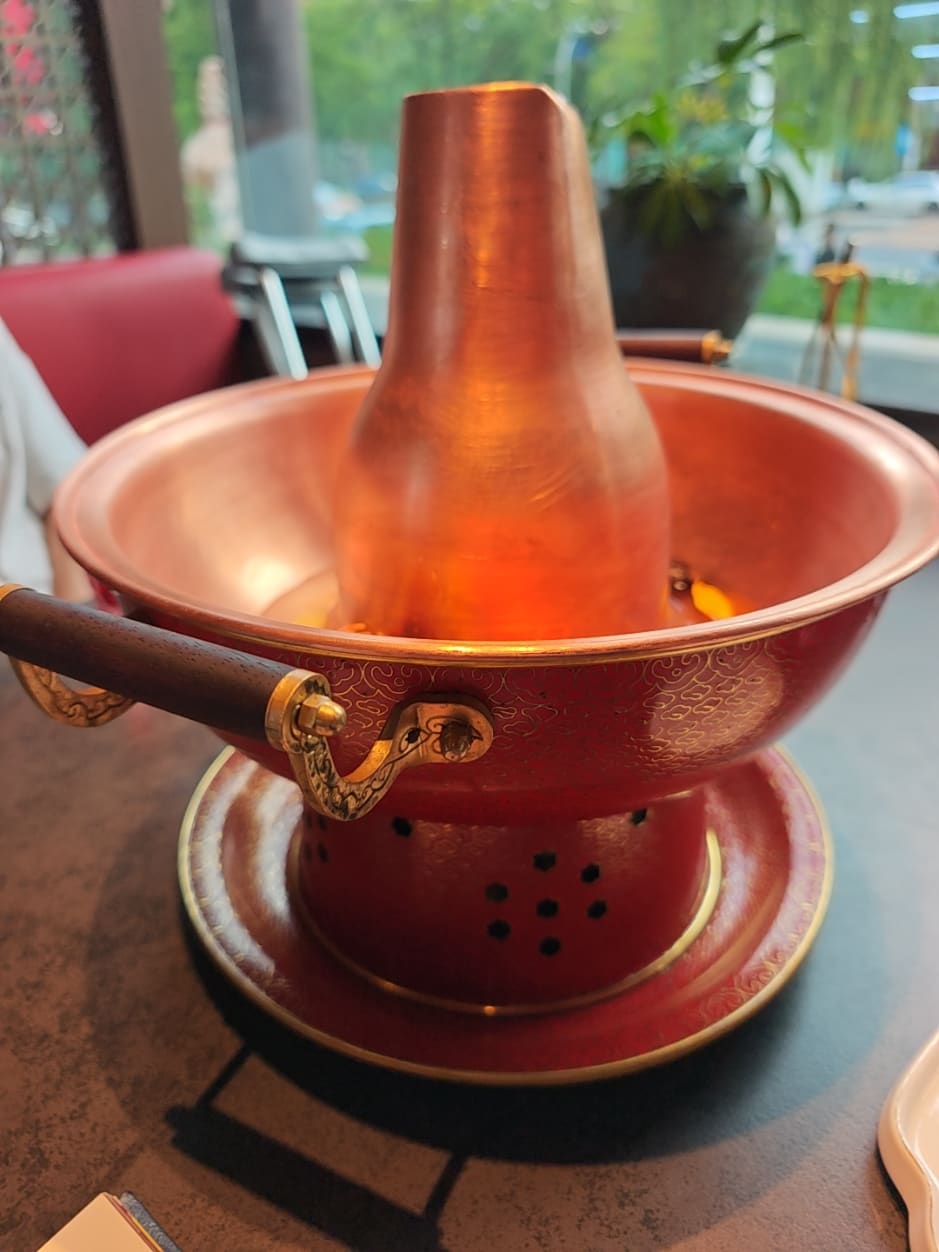
A copper pot, charcoal up the chimney, mutton and sesame sauce: the first meal of the week and the least complicated one. Forbidden City, then Jingshan
In at opening through the Meridian Gate, north through the halls, out at the Gate of Divine Prowess in about three hours. Cross the road and climb Jingshan for the view back over the roofs — the only place that shows you the scale of what you have just walked through.
Temple of Heaven at six, hutongs after lunch
The park opens at six and belongs to the neighbourhood until eight: dancers, kite flyers, a choir under the cypresses. The temple itself is forty minutes. The afternoon is the alleys east of the Drum Tower, at walking pace, with no second ticket.
Out to Gubei, and a boat down the canal
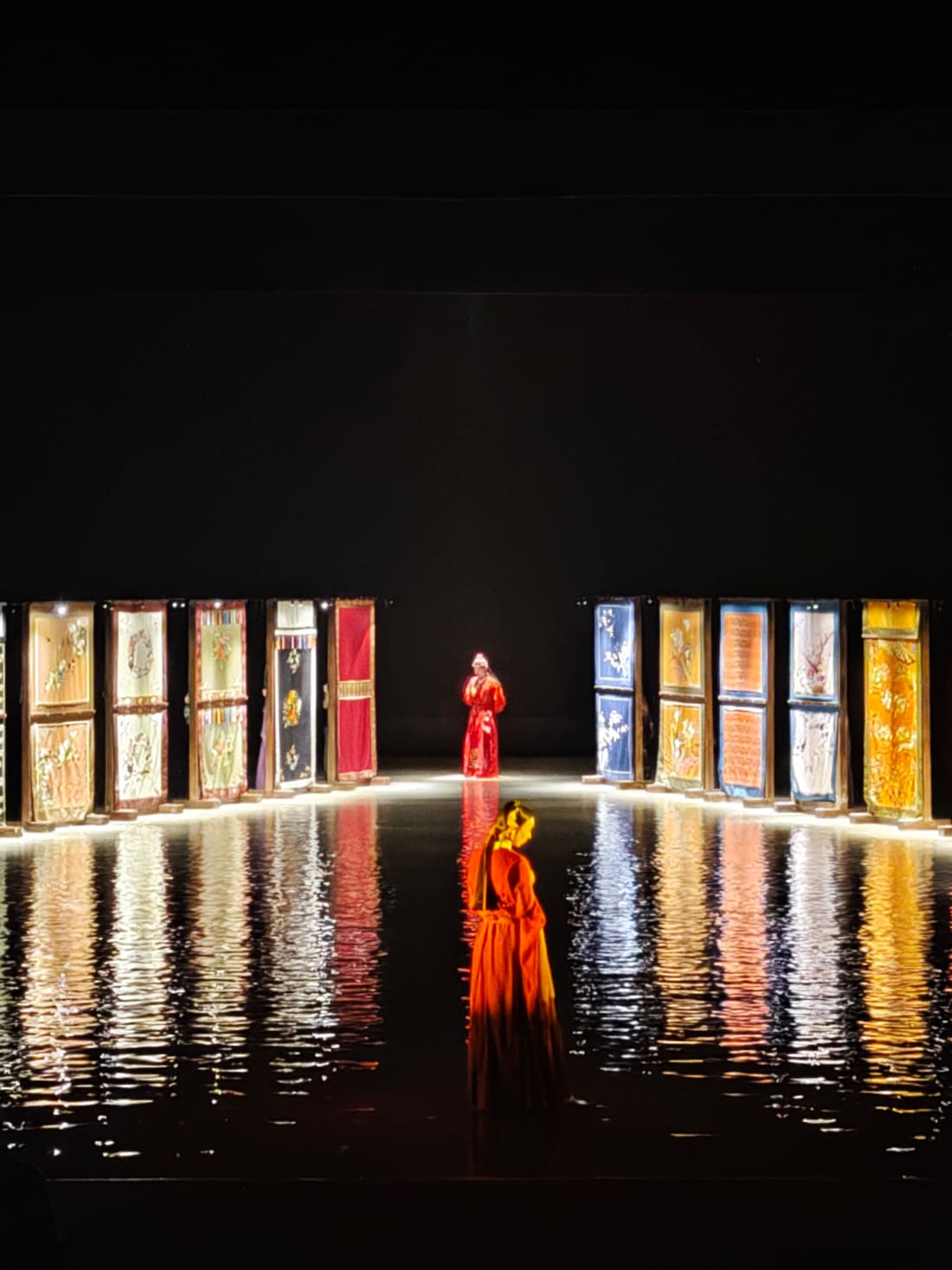
Two hours north-east of the city, and the pace drops the moment you arrive. A wooden boat down the canal in the afternoon, the water street when the light goes flat, and the night show on the water after dark — the one thing here that is worth staying up for.
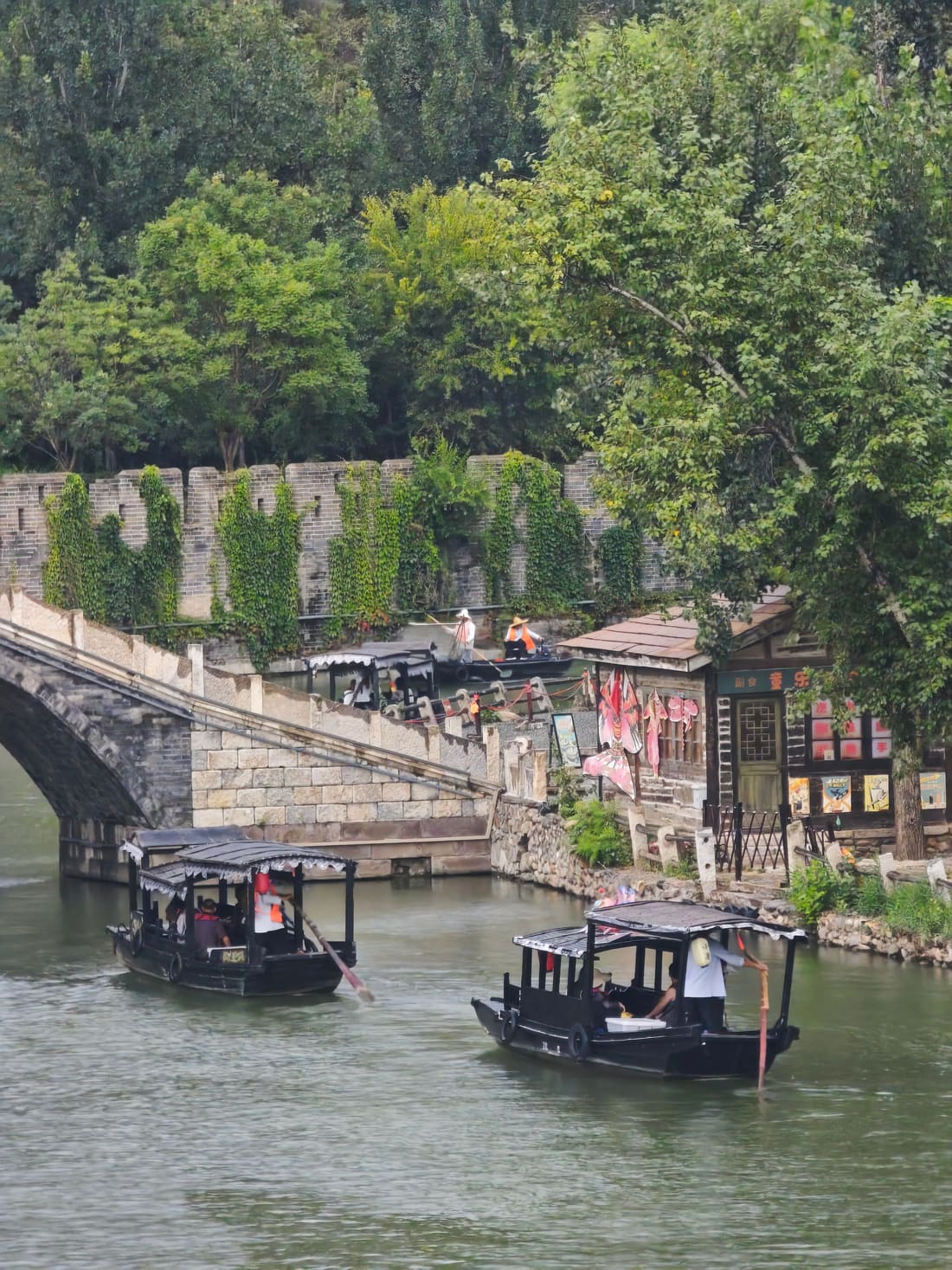
Pole boats under the stone bridge, and the old embankment held together by creeper. 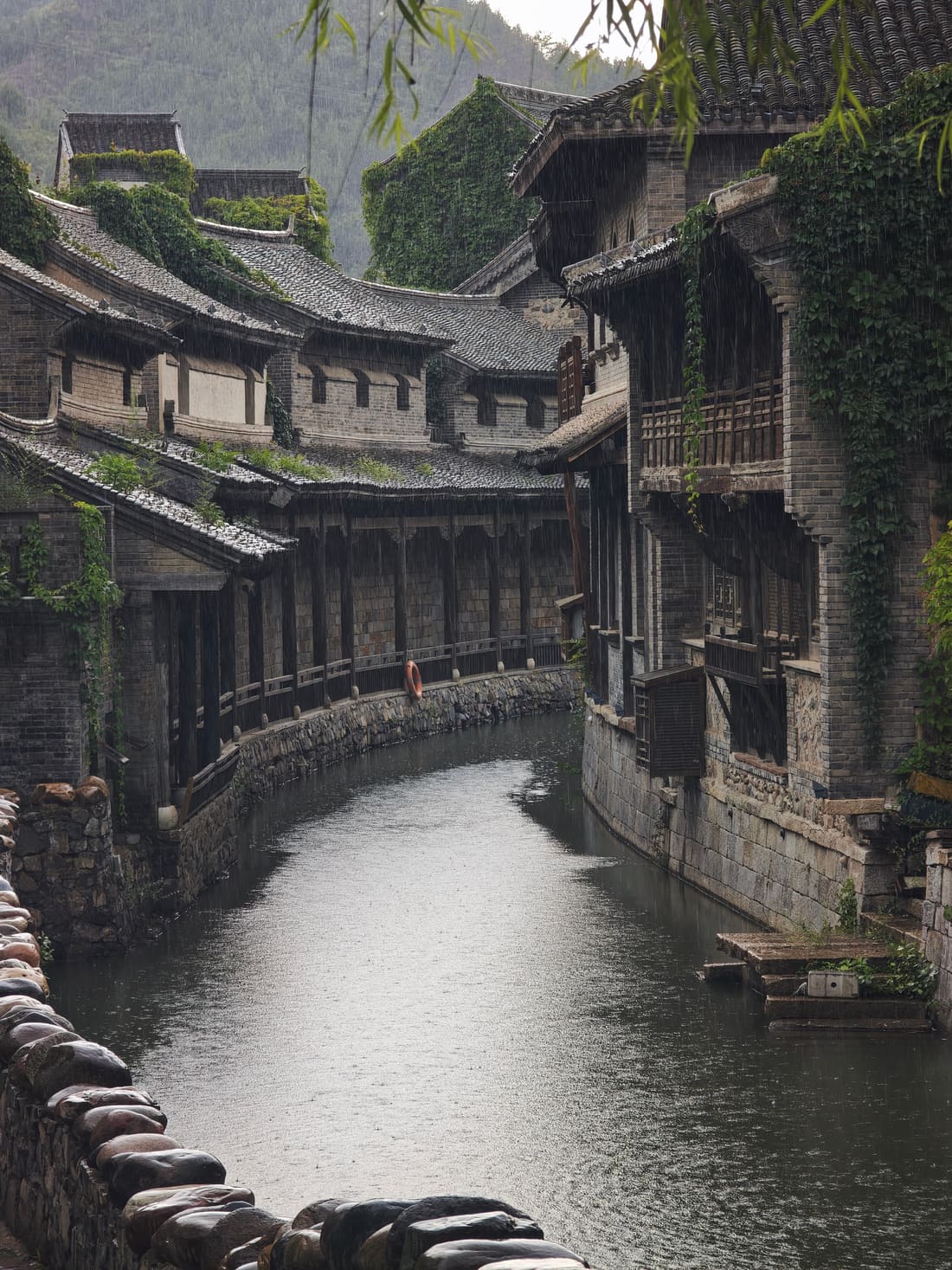
Simatai, the unrestored side
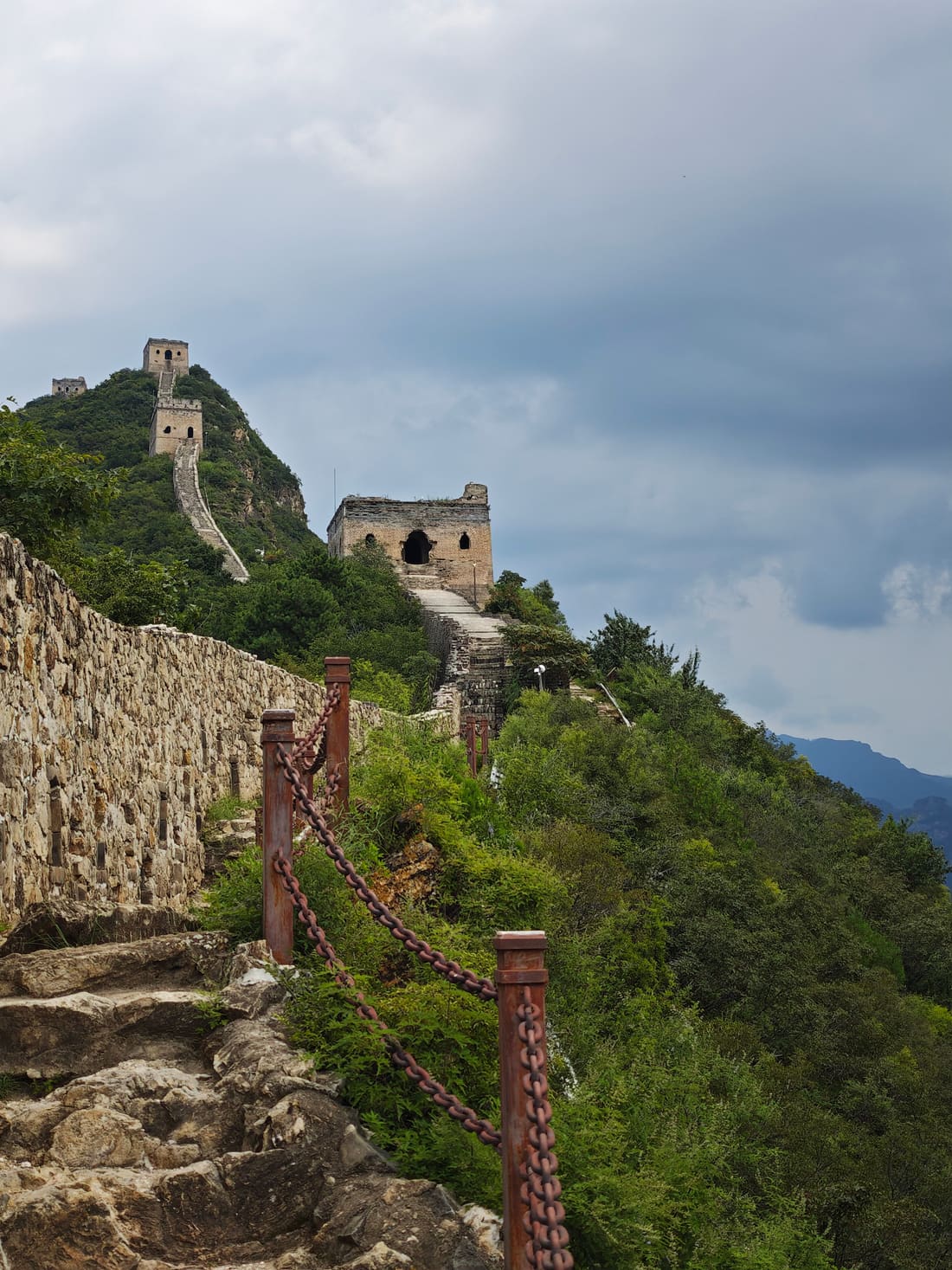
No five-o'clock start: out at half past ten, cable car up, and onto the east section while the coaches that came early are heading back down for lunch. Steep, worn stone, a chain railing that is there for a reason — one tower out and back, not the whole ridge. Down by two, and the afternoon lands in Gubei: hot spring first, then the canals again once the day-trippers have gone.
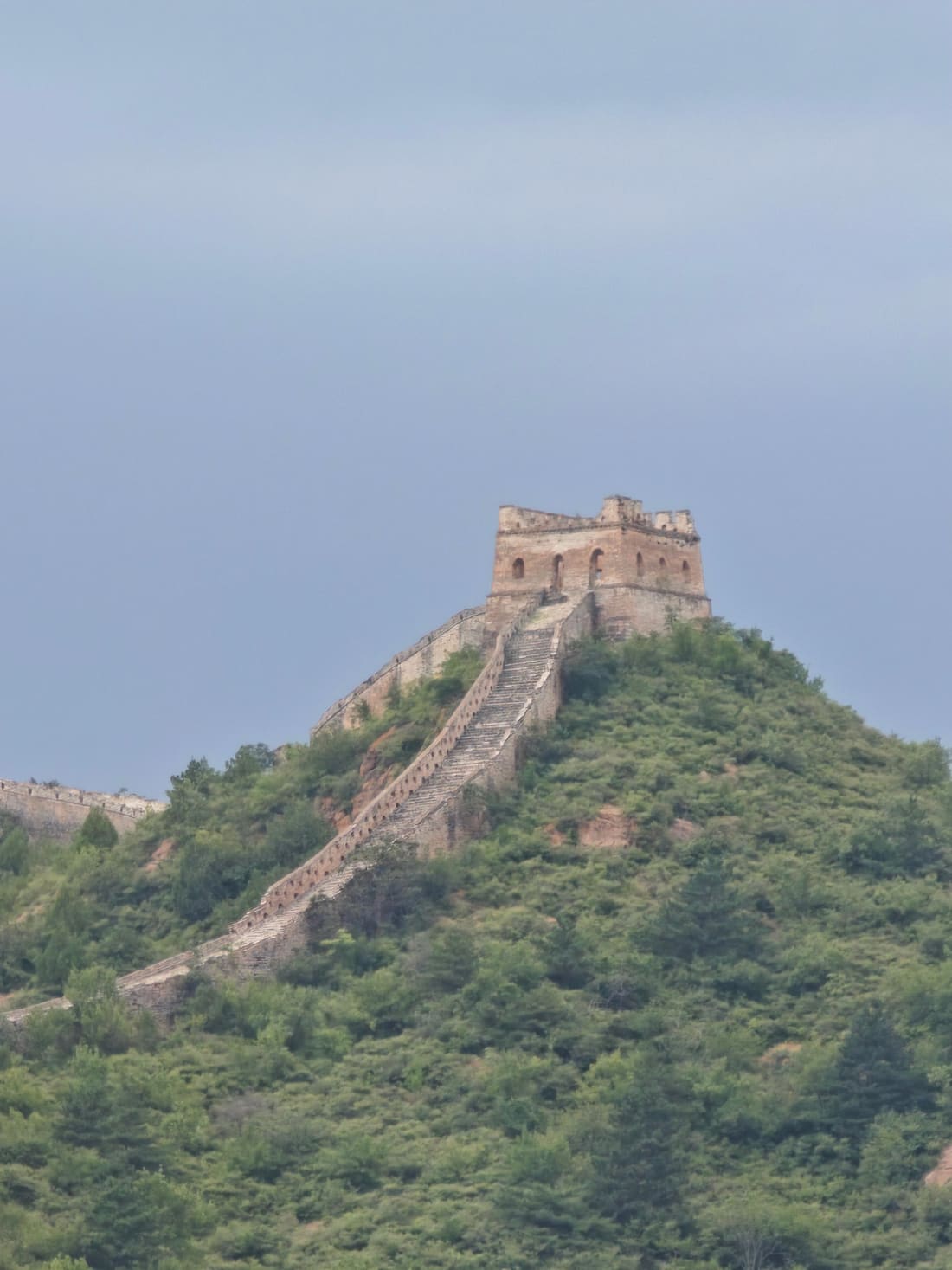
Half past eleven: the first tower, and nobody on the steps behind it. 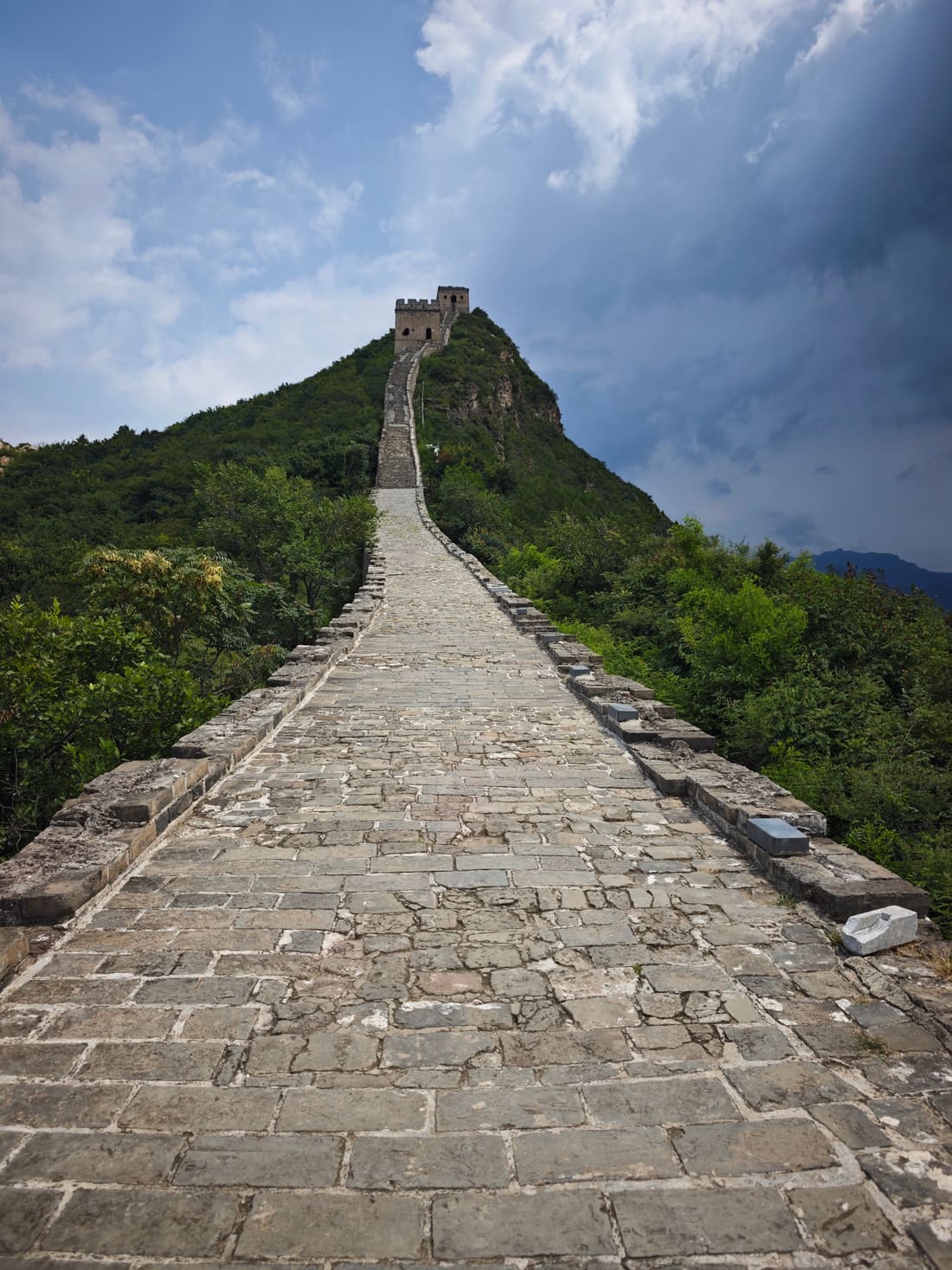
Back to the city, and a day with nothing in it
Return in the morning and keep the rest of the day deliberately empty. This is the day people fill with a second museum and regret by four o'clock. If you want one thing, make it the 798 yards or a long lunch — not another palace.
Fly out
The airport express from Dongzhimen is twenty-five minutes and does not care about traffic. Leave three hours, not two: the international queues at Capital are the slowest hour of the week.
What this one cost
Quoted at the 99 USD tier for a seven-day route with two nights outside the city. The number that surprises people is the wall transfer — a private car two and a half hours out and back costs more than a night at Gubei — and it is the one booking worth making early.
What is not in the document
- No tickets bought for you. We give you the site, the release time and the exact ticket type; the purchase stays in your name because it needs your passport.
- No guide and no driver for the city days. Everything in Beijing here is metro and walking — the wall transfer is the only booked car.
- No hotel booking on your behalf. We tell you which courtyard area to stay in and why, and you book it.
FAQ
Is Gubei a real old town?
No. It is a canal town rebuilt in 2010 and it does not pretend otherwise once you are inside — the exact opposite of the wall it sits under. What it buys you is a bed ten minutes from the Simatai gate and an afternoon that is not a car, and that is the entire reason it is in this plan.
Why Simatai and not Mutianyu?
Because the brief asked for old stone and empty steps, and Mutianyu is neither by mid-morning: it is faithfully restored and it queues for its cable car by nine. Simatai is steeper, largely unrestored, and far enough out that midday is still quiet. Choosing it costs you a longer drive, not the thing the brief was protecting.
Can you do this wall without much walking?
At Simatai, to a point: there is a cable car up to the ridge and the walking is along the top. Coming down is steps either way, and the chain railing on the unrestored side is not decorative.
Plan a trip like thisAll three plans